
5 Awesome Things that Surprised Me on My Antarctica Cruise with Atlas Ocean Voyages
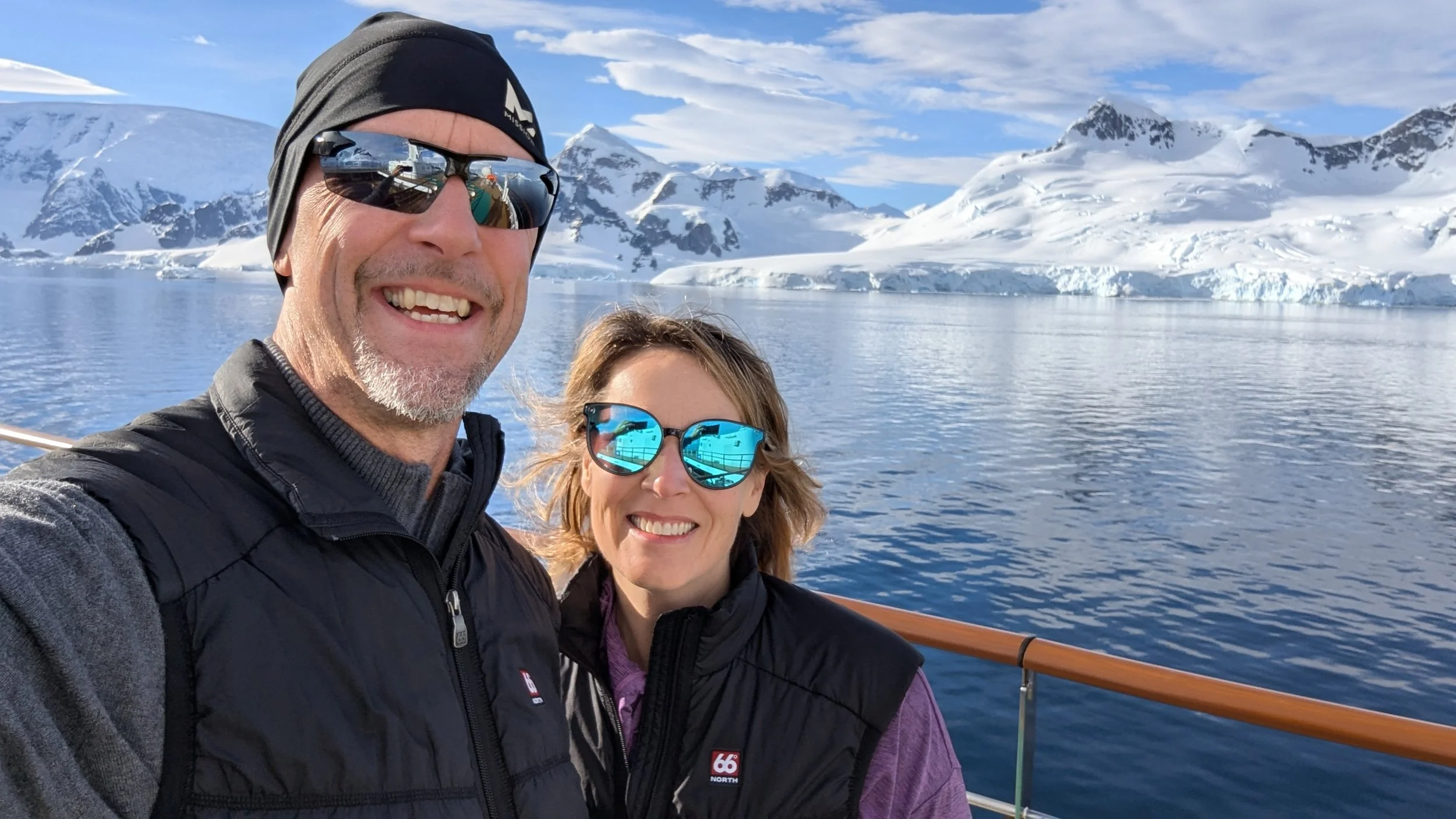
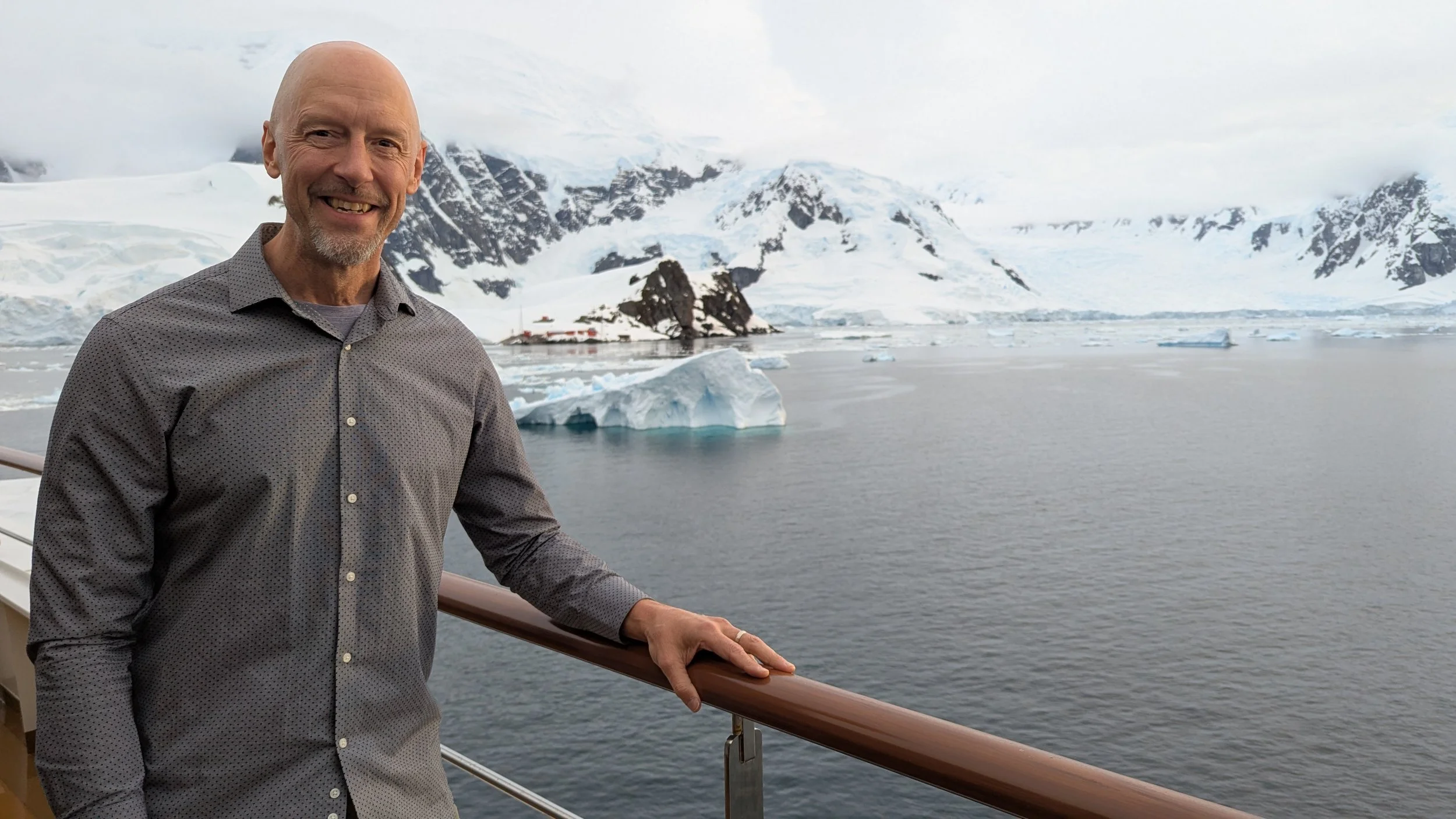
During our 11-day cruise with Atlas Ocean Voyages, we had ideal weather conditions, so we could see the very best of Antarctica. (Photo by John Roberts)
The beauty and magic of Antarctica is more accessible than ever before, with more travelers each season making it a priority to take a journey to experience the White Continent.
For many people, this trip will represent the most spectacular journey of their lives.
Antarctica truly is a special place, but even the best pictures can’t tell the whole story. You really must go there to fully understand and appreciate its awesomeness.
Antarctica is a frozen continent at the bottom of the world, with a harsh and unforgiving environment — where only the most fascinating and well-adapted creatures can survive.
It’s a destination that has called to adventurers and travelers who want to experience its beautiful natural landscapes and witness first-hand the animals that live there.
I enjoy Antarctica because it’s an intimate and immersive experience, away from crowds, allowing me to breathe in fresh air and feel a sense of calm and peace that can only get from this kind of serenity.
And small expedition ships — those carrying 200 passengers or fewer — offer the ideal way to explore Antarctica’s remote wilderness.
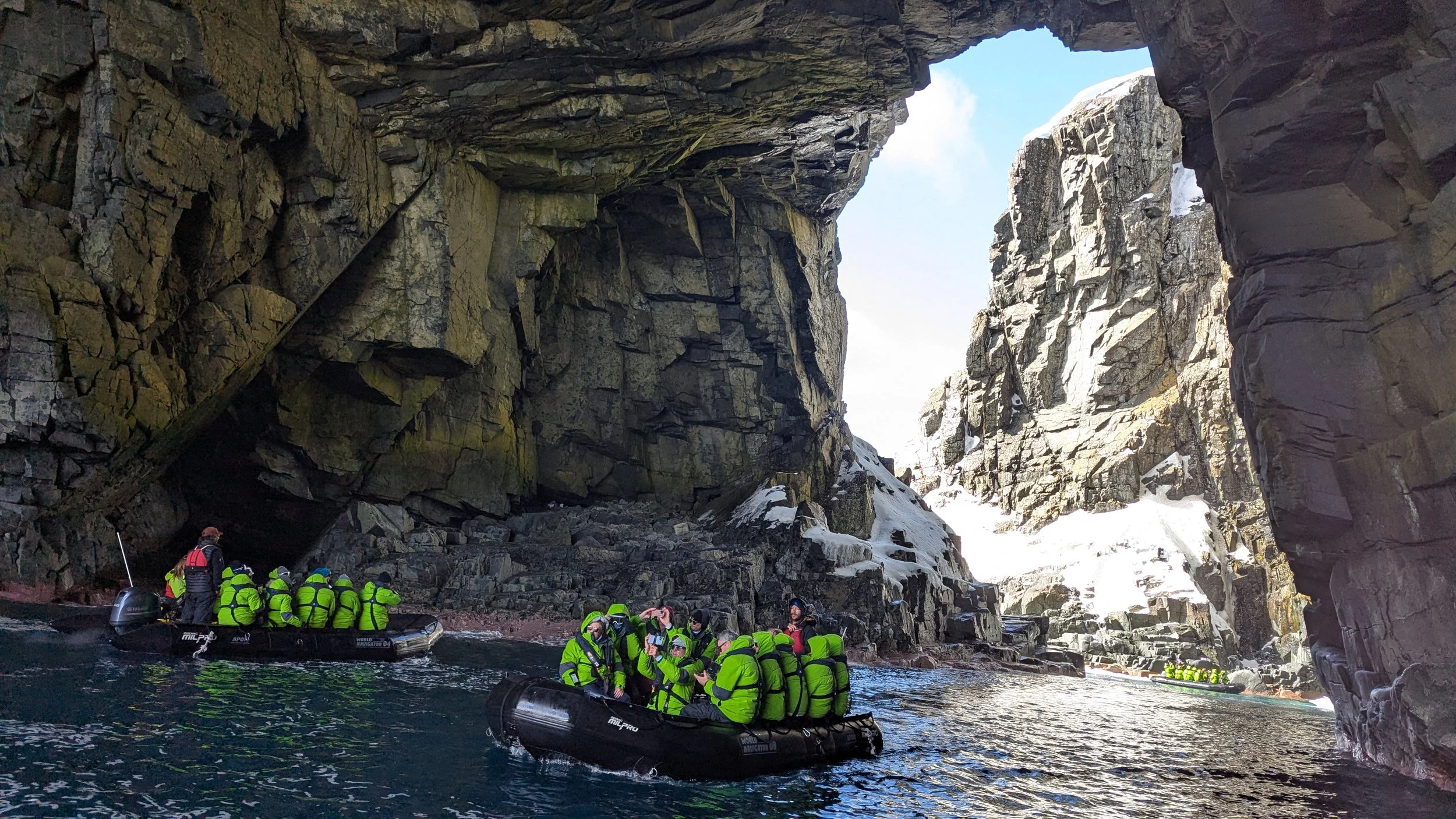
Unlike larger vessels, smaller expedition ships can navigate narrow channels, access secluded landing sites and allow for more-frequent shore excursions. Regulations from the International Association of Antarctica Tour Operators (IAATO) further favor small vessels. This means ships with fewer than 200 passengers can conduct two landings per day, maximizing your time ashore.
Groups are limited in sizes up to 100 at a time ashore.
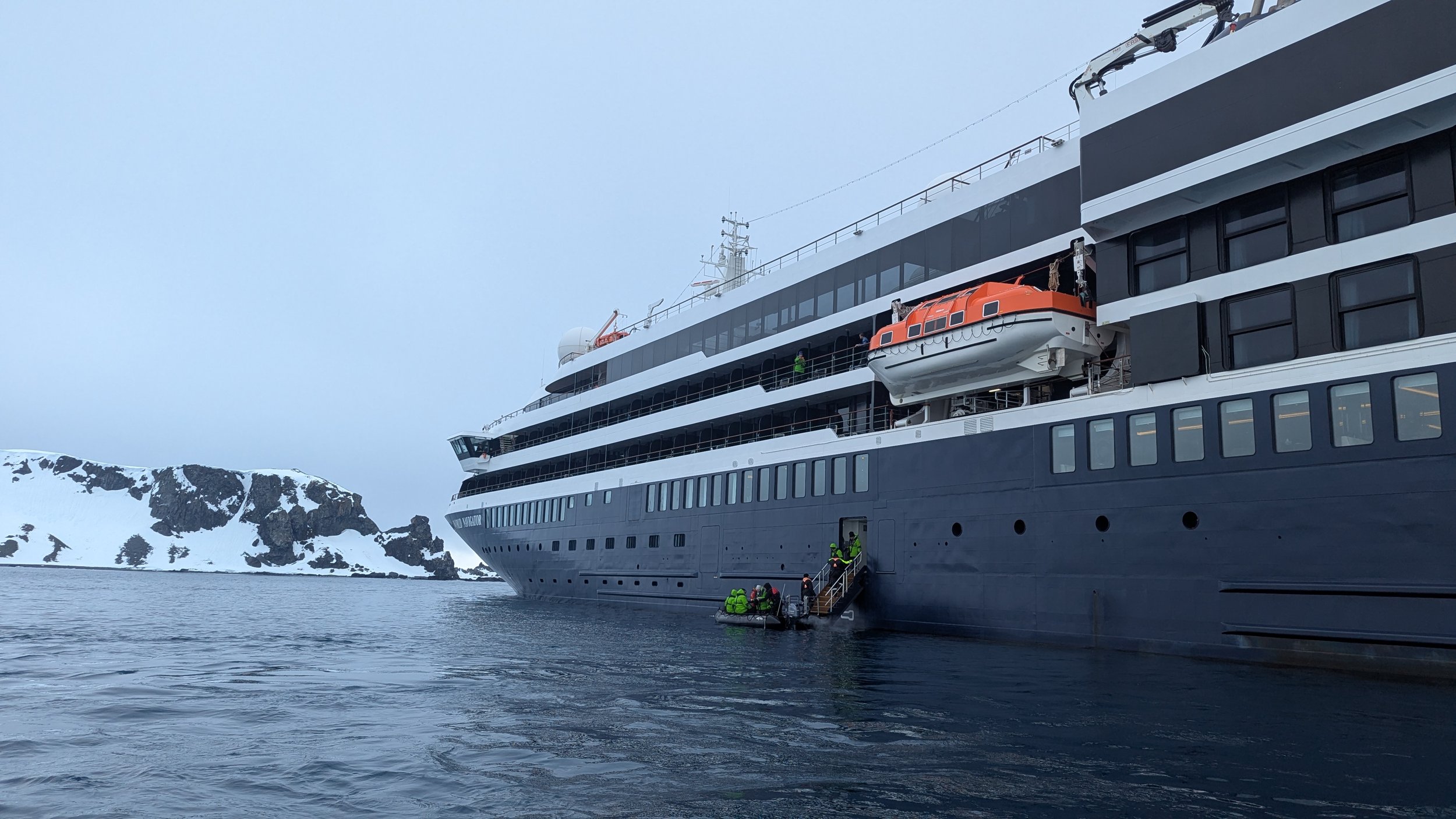
Our home for the trip was the 196-passenger expedition yacht World Navigator. (Photo by John Roberts)
This means you'll spend less time waiting in line and more time amid penguins, seals and glaciers.
I’ve been to Antarctica four times now, most recently a second trip with Atlas Ocean Voyages on the 196-passenger ship World Navigator. Every time I go on a voyage to the bottom of the world, I learn something new, and this time, we had a great time amid ideal weather conditions in early December.
This is right near the start of the Antarctica cruising season, and Atlas features so many fun activities to do both onboard and ashore that the journey was especially memorable this time around.
Check out these five things that made this our best Antarctica cruise so far.
1. Getting Really Close to Whales
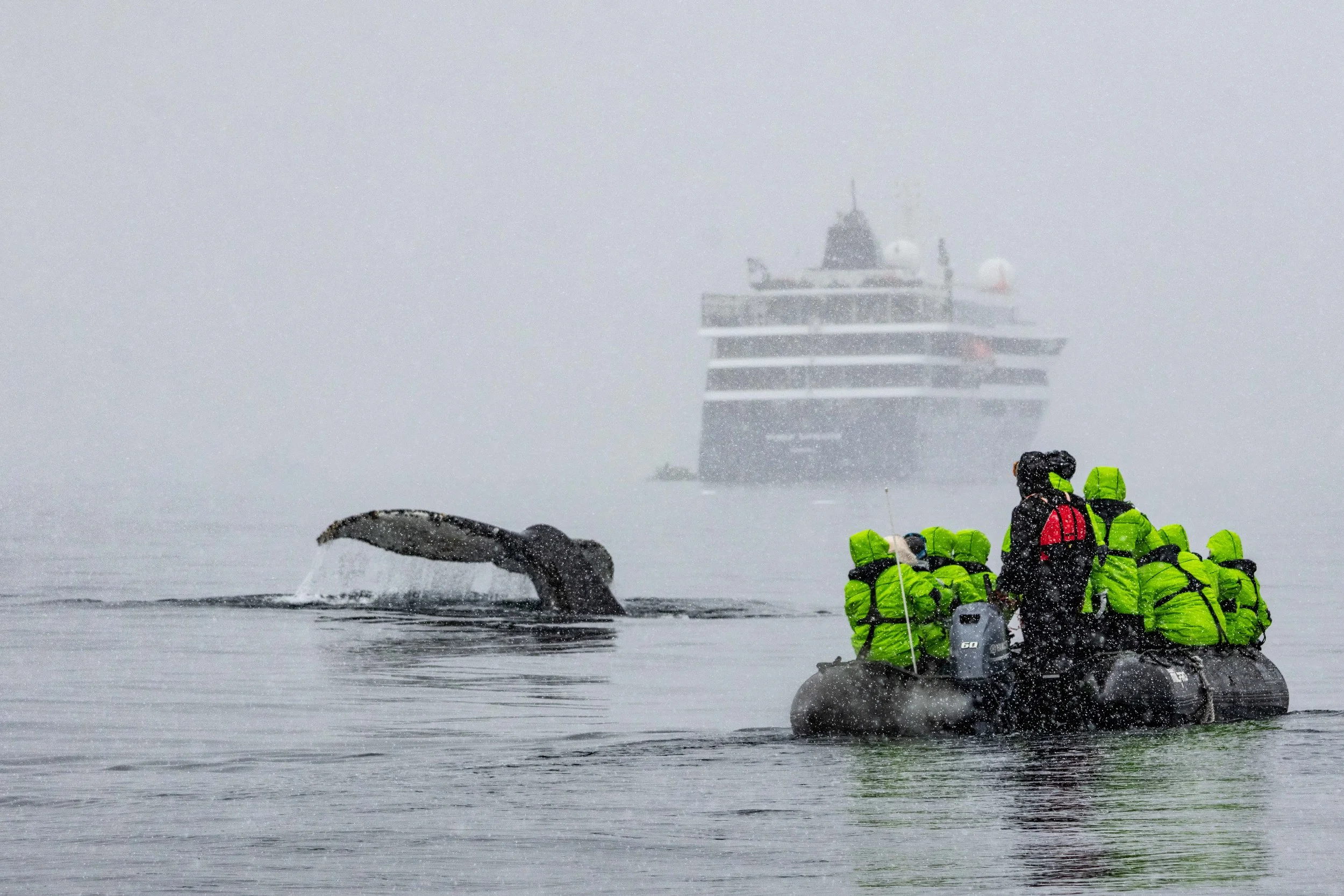
We had an incredible afternoon watching humpback whales feeding. (Photo by John Roberts)
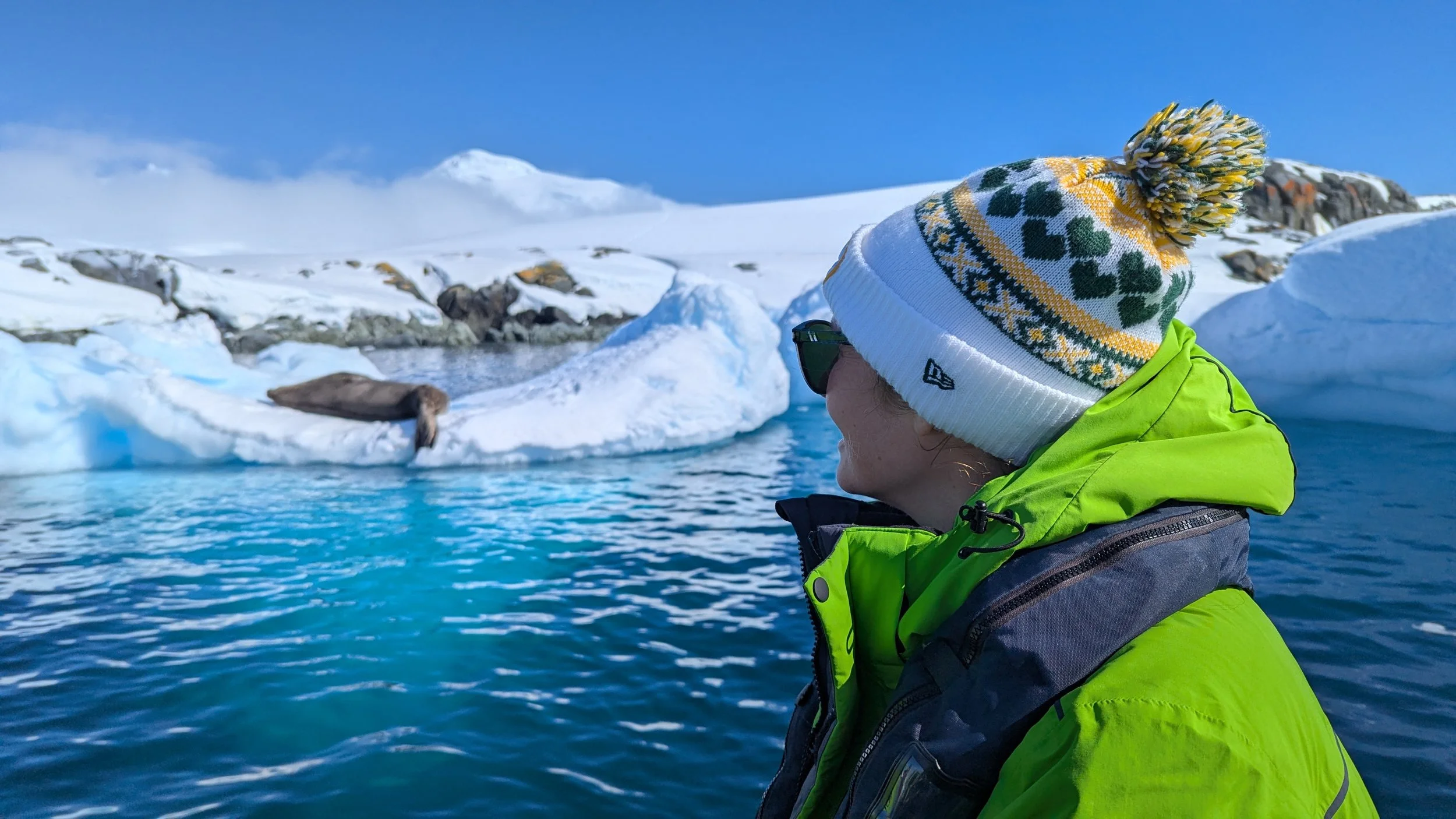
When you come to the White Continent, you can count on seeing plenty of cool animals. The penguins and seals are always plentiful. You’ll seeing hundreds of gentoos and chinstraps and the occasional Adelia penguin, all waddling along the snow while building nests and tending to eggs or chicks on their chosen rocky hilltops and outcroppings, or and maneuvering on icebergs and in the waterways. You’ll also see seals and sea lions lounging on the beaches or floating on ice in the bays.
Ideally, you’ll also get a few glimpses of whales and orcas.
In past seasons down to Antarctica, we’ve seen plenty of whales from a distance (whether on the outer decks of the ship or while out in a kayak or Zodiac), with humpbacks feeding and flashing their backs, blowing mists into the skies from their blowholes and showing us their distinctive tails as they dive deeper.
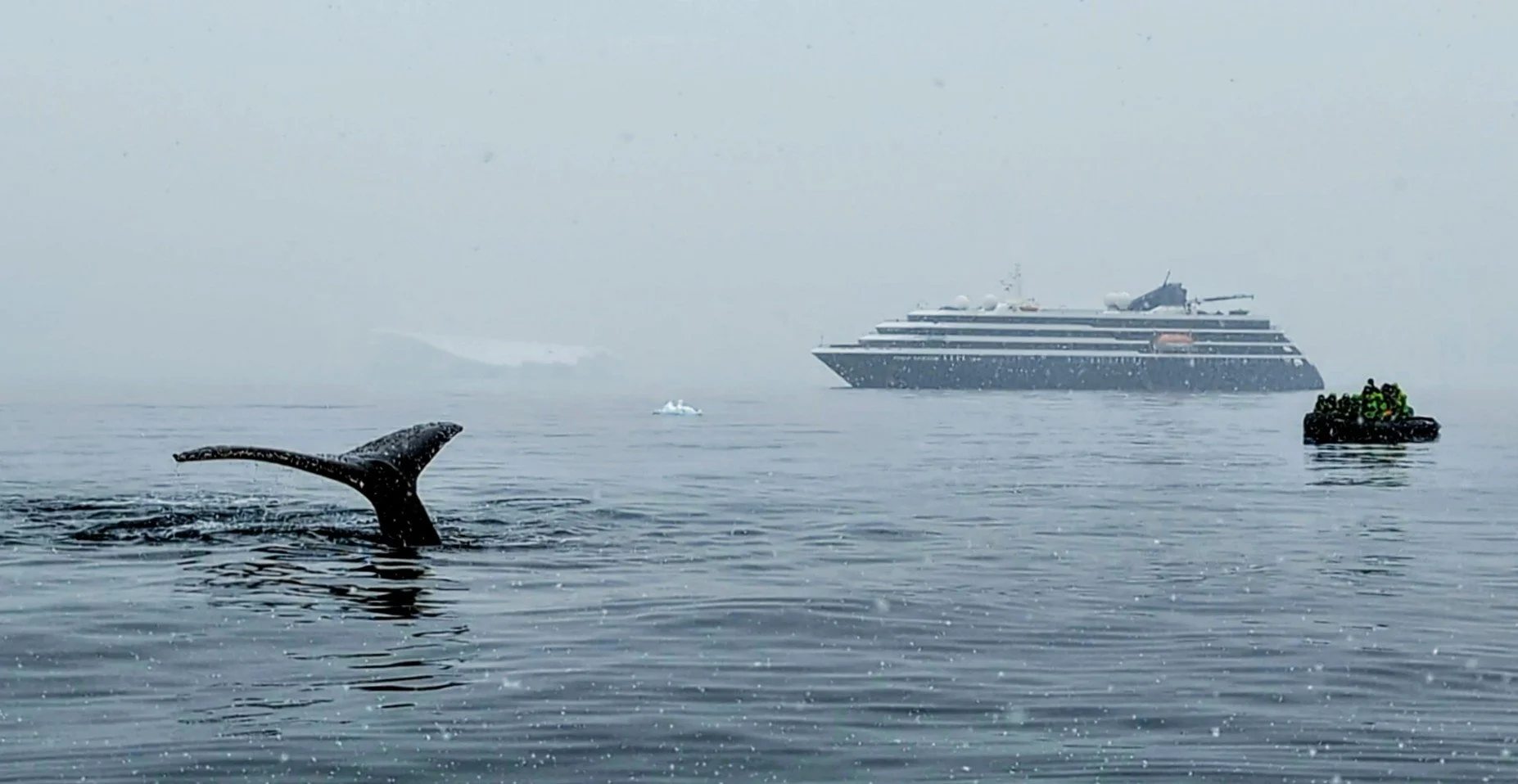
We saw more than 20 whales during our afternoon excursion. The humpbacks come to Antarctica to feed during this time. (Photo courtesy of Atlas Ocean Voyages)
This time, though, we had a couple days with up-close interactions. One afternoon, while out on a Zodiac tour, we spent an hour slowly moving through an active feeding area while gazing upon more than two dozen of the great creatures who approached as close as 10 to 20 yards away.
It was mesmerizing, as the snow fell gently on the water. It was silent except for when we would hear the “whoofsh” of a blowhole, indicating the position of a beautiful whale that would then glide across the surface. We then would gasp in unison when a humpback would slowly arch its white-colored tail and dive deeper.
This experience was a definite highlight of the voyage, and our expedition team noted how fortunate we were to have been so fortunate to have such an up-close and long-lasting encounter that day.
2. You Come for the Animals and Fall in Love with the Ice
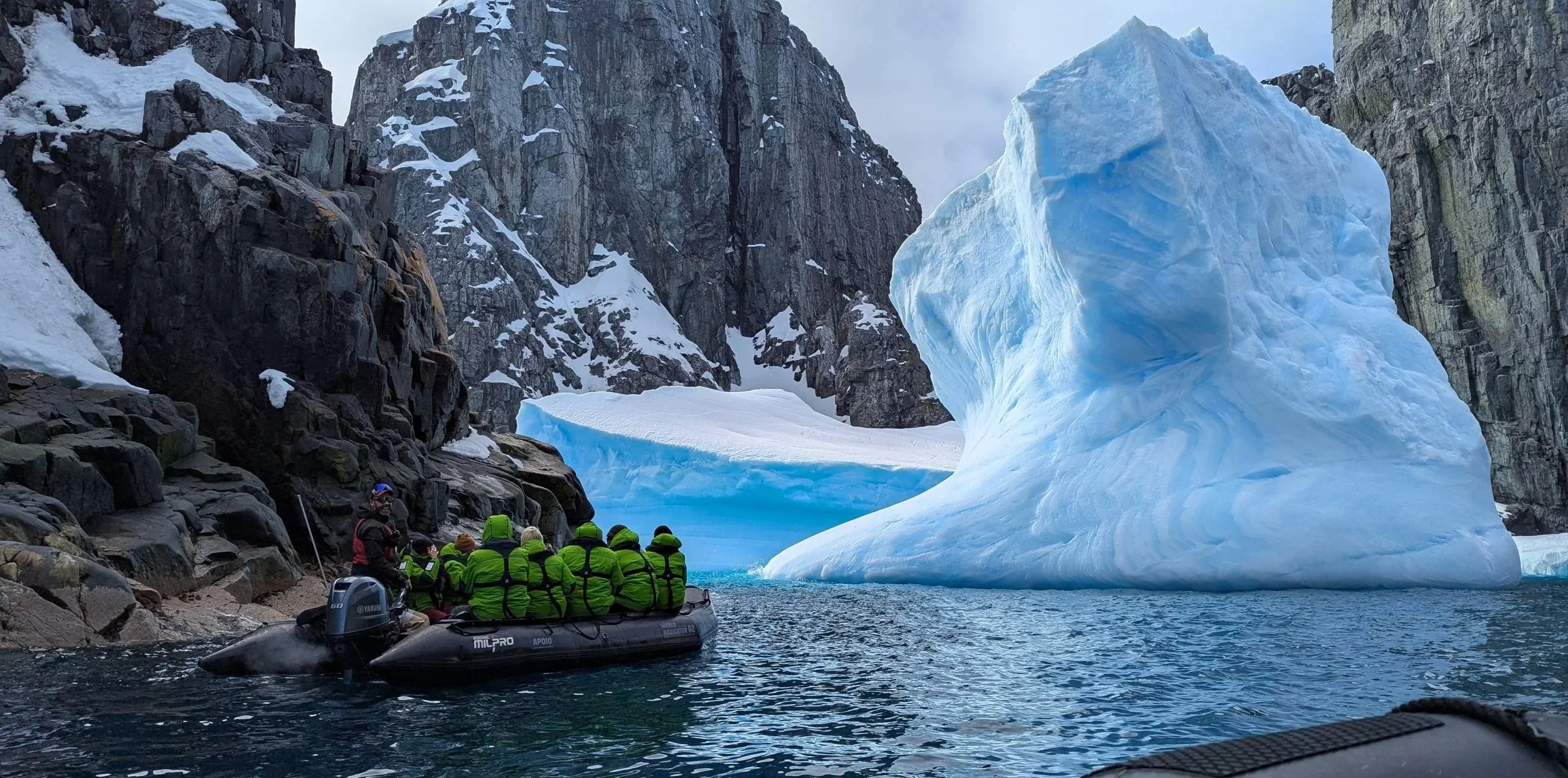
We saw a beautiful gallery of iceberg sculptures at Spert Island. This was just one of several days when we were mesmerized by the ice in Antarctica. (Photo by John Roberts)
All the creatures are impressive, of course. You have a variety of seabirds, penguins, seals and whales that grab your attention.
But the snow-covered mountains, and icy channels and fjords will catch you off guard. The blues, whites, greens and grays of Antarctica are displayed in the icebergs, glaciers and water that surround you once you reach the continent and its outer islands and bays.
The black sand from the volcanic beaches and a mosaic of pebbles — which are pink, red, orange, brown, yellow, silver, bronze and even pale blue — also lend to the sense that you are moving within a vibrant painting.
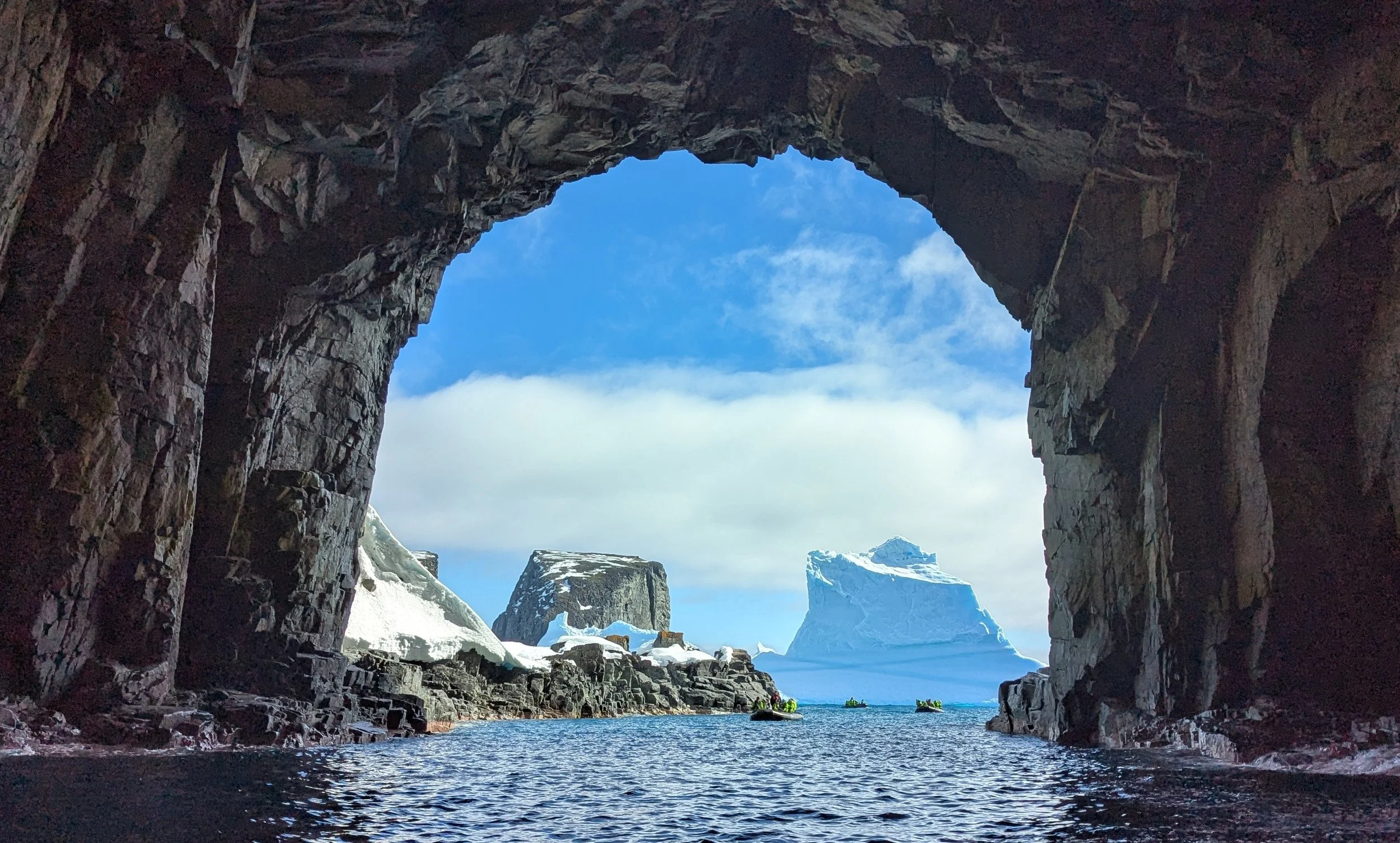
Visitors love the massive glaciers, ice sheets and icebergs. Sailing through the Lemaire Channel, our ship was surrounded by brash ice, bergy bits and large icebergs that show off various hues of blue and appear as giant sculptures bobbing gently in the fjords and waterways during our voyage.
We also had an incredible afternoon on a Zodiac tour at Spert Island when calm winds and clear skies allowed us to get close to floating icebergs that line up like sculptures in a gallery.
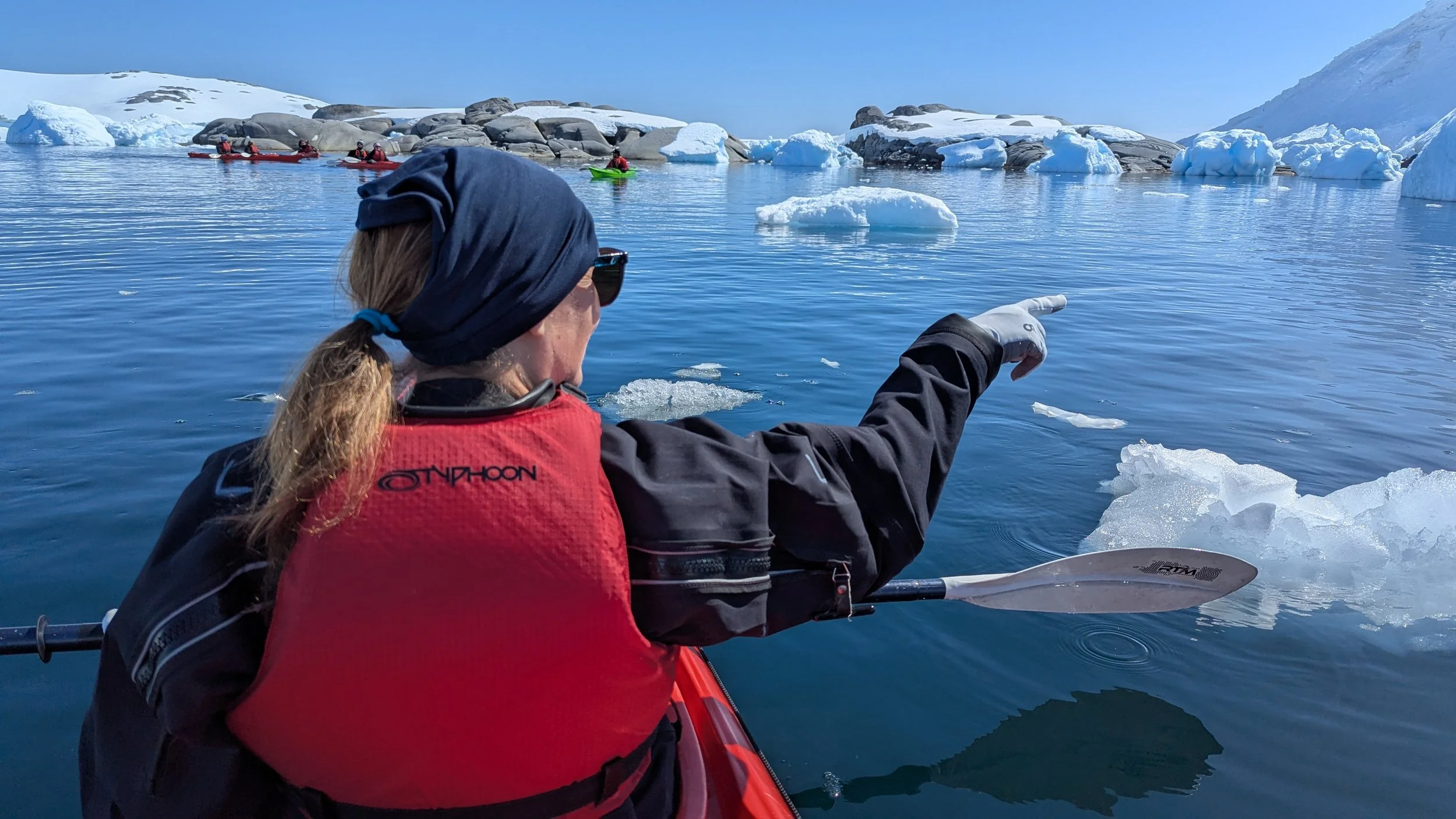
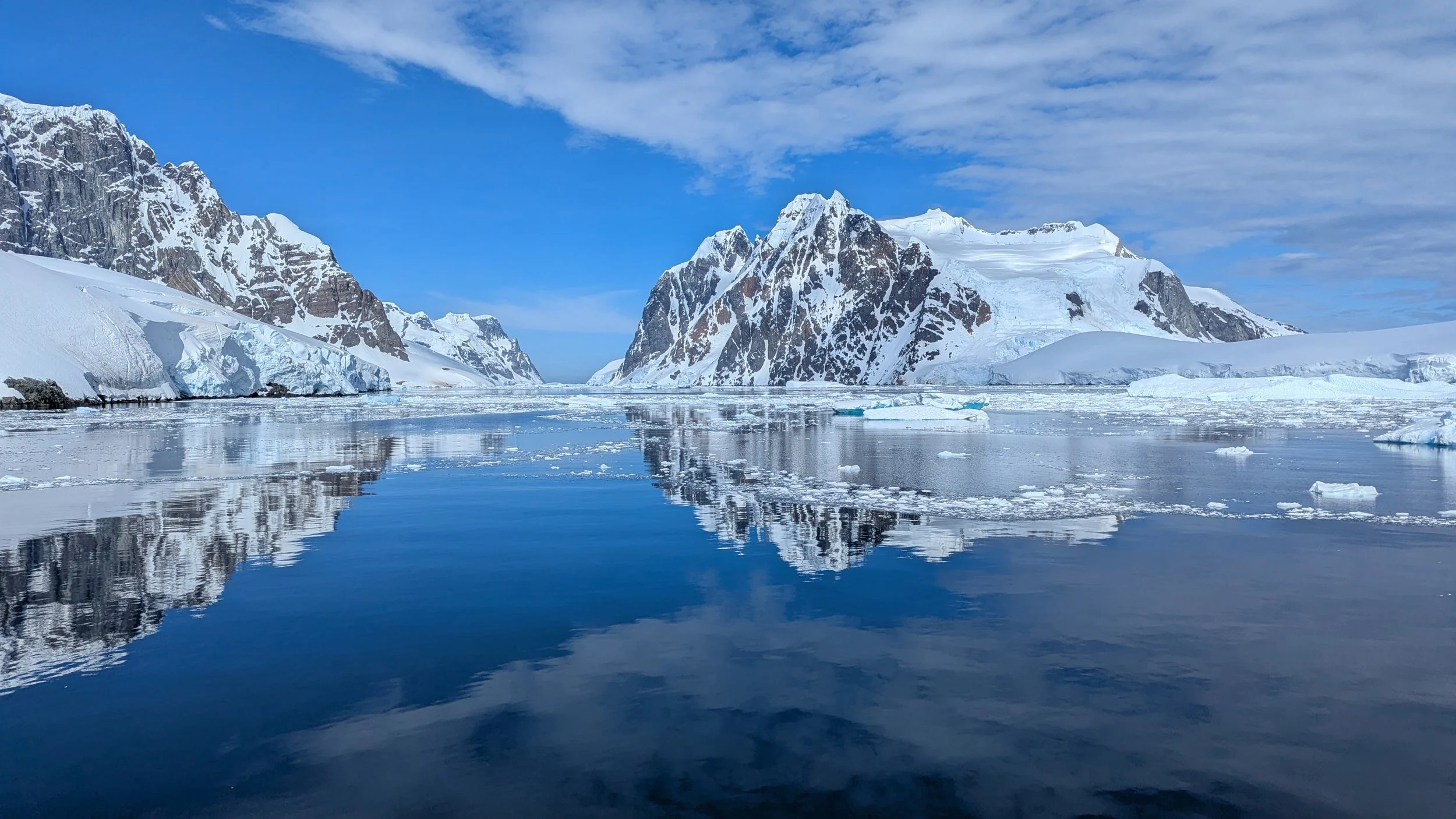
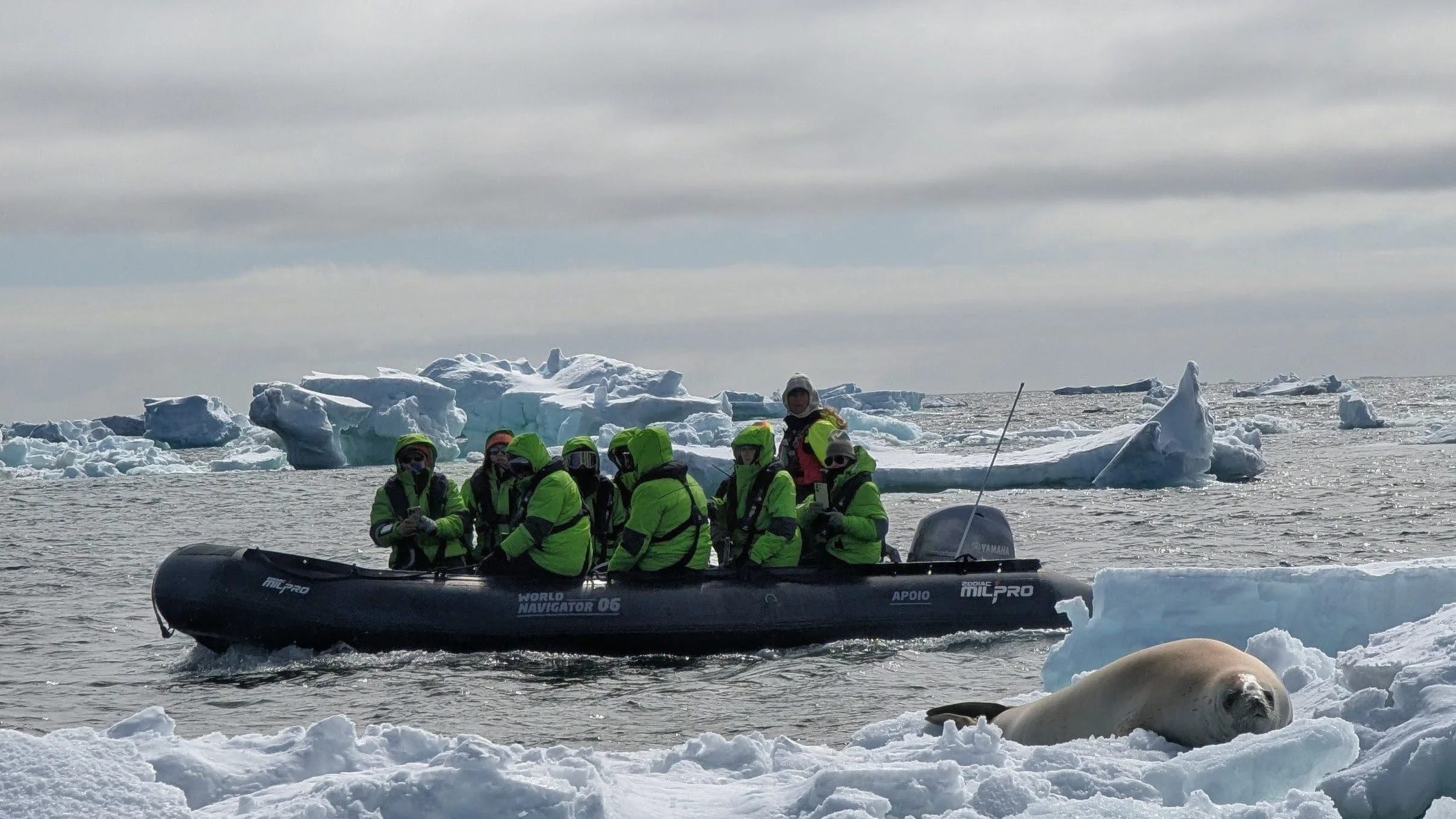
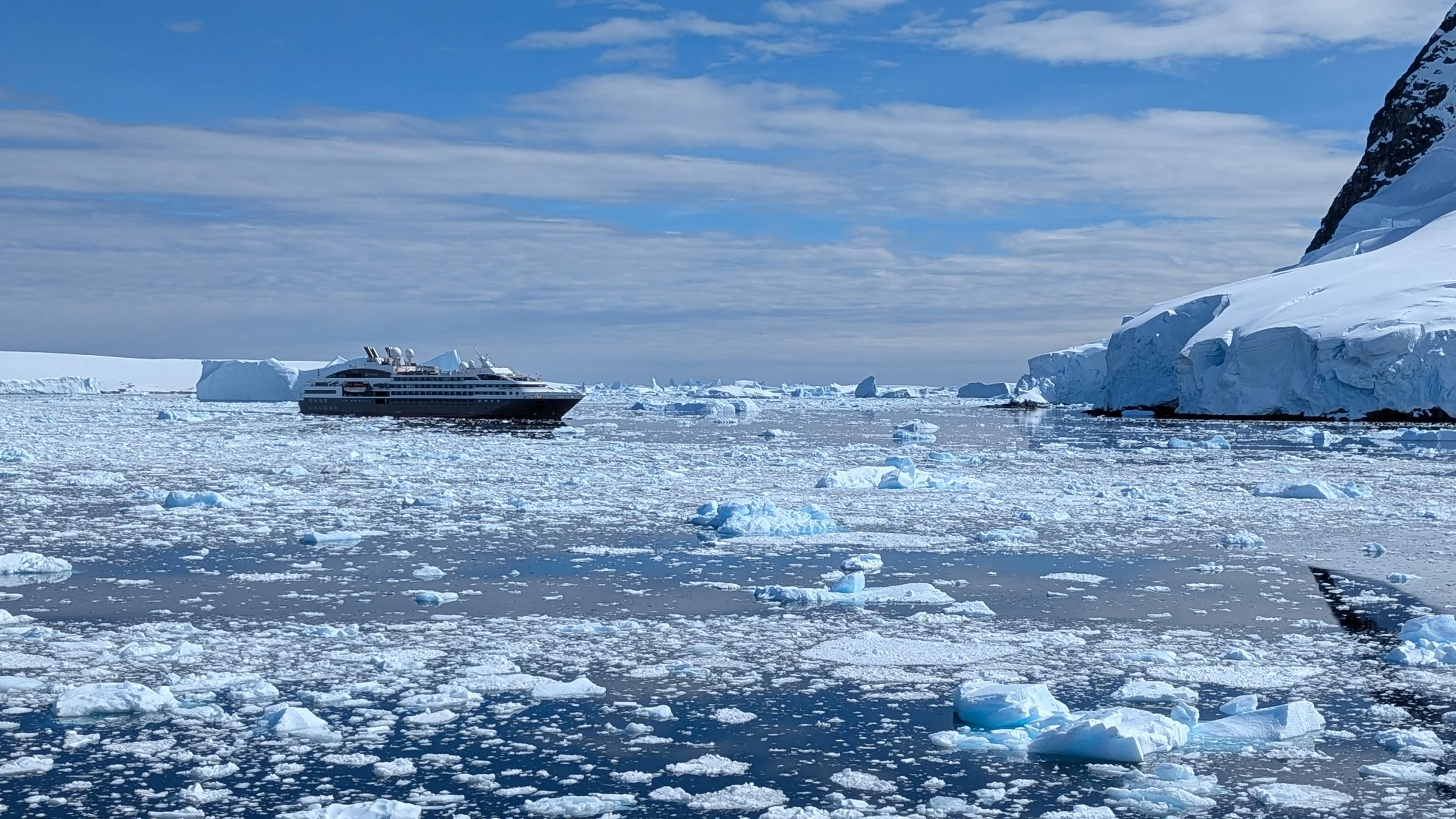
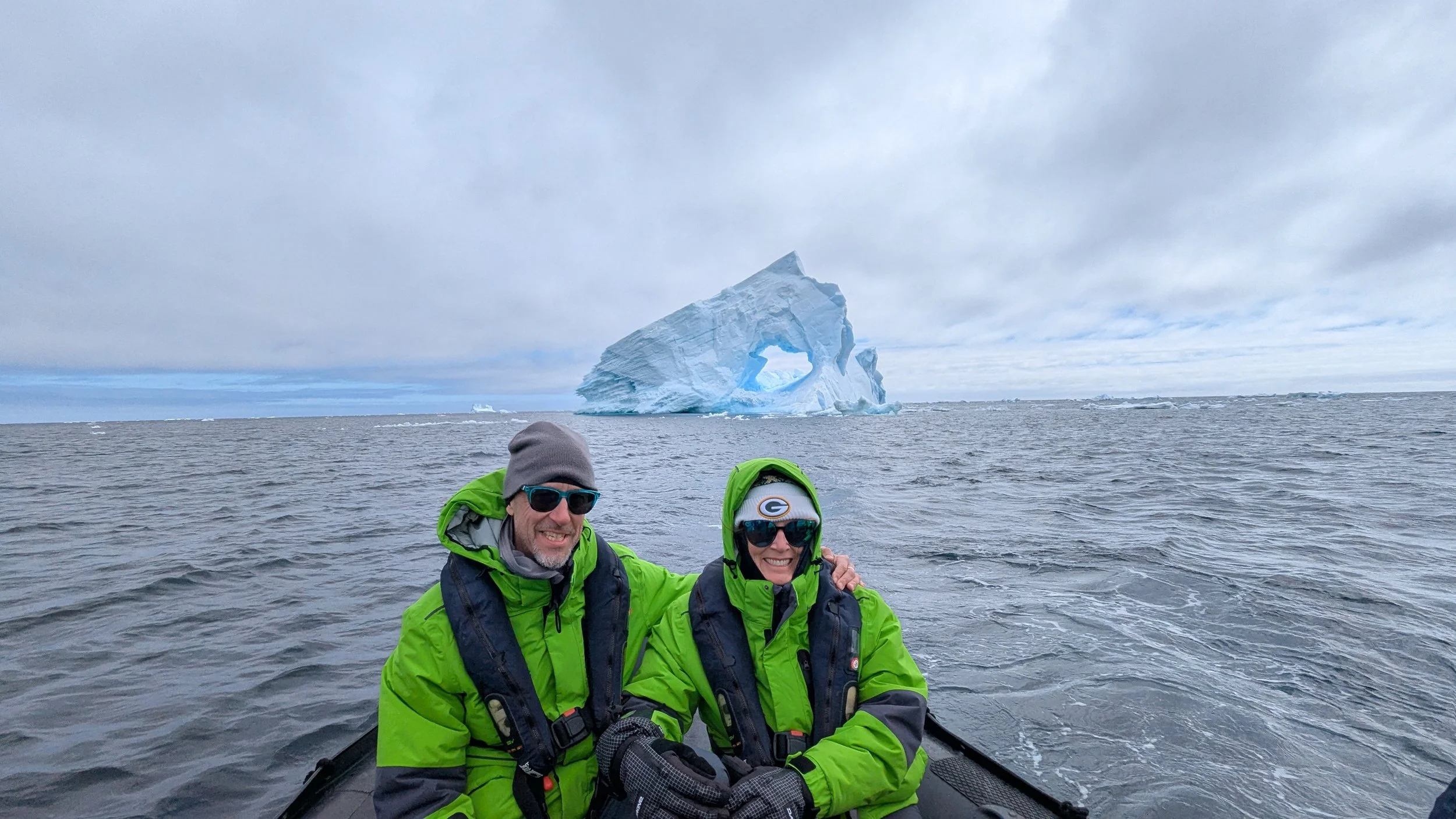
During this early part of the season in December is when you get the best chance to see the most-impressive ice formations, as well as pristine clean white snow-covered mountains and landscapes.
This is when Antarctica looks the best, in my opinion.
During the latter part of our trip, we cruised out to see a jaw-dropping iceberg that measures 1.5 miles long and is visible by satellite.
3. An Amazing Variety of Food
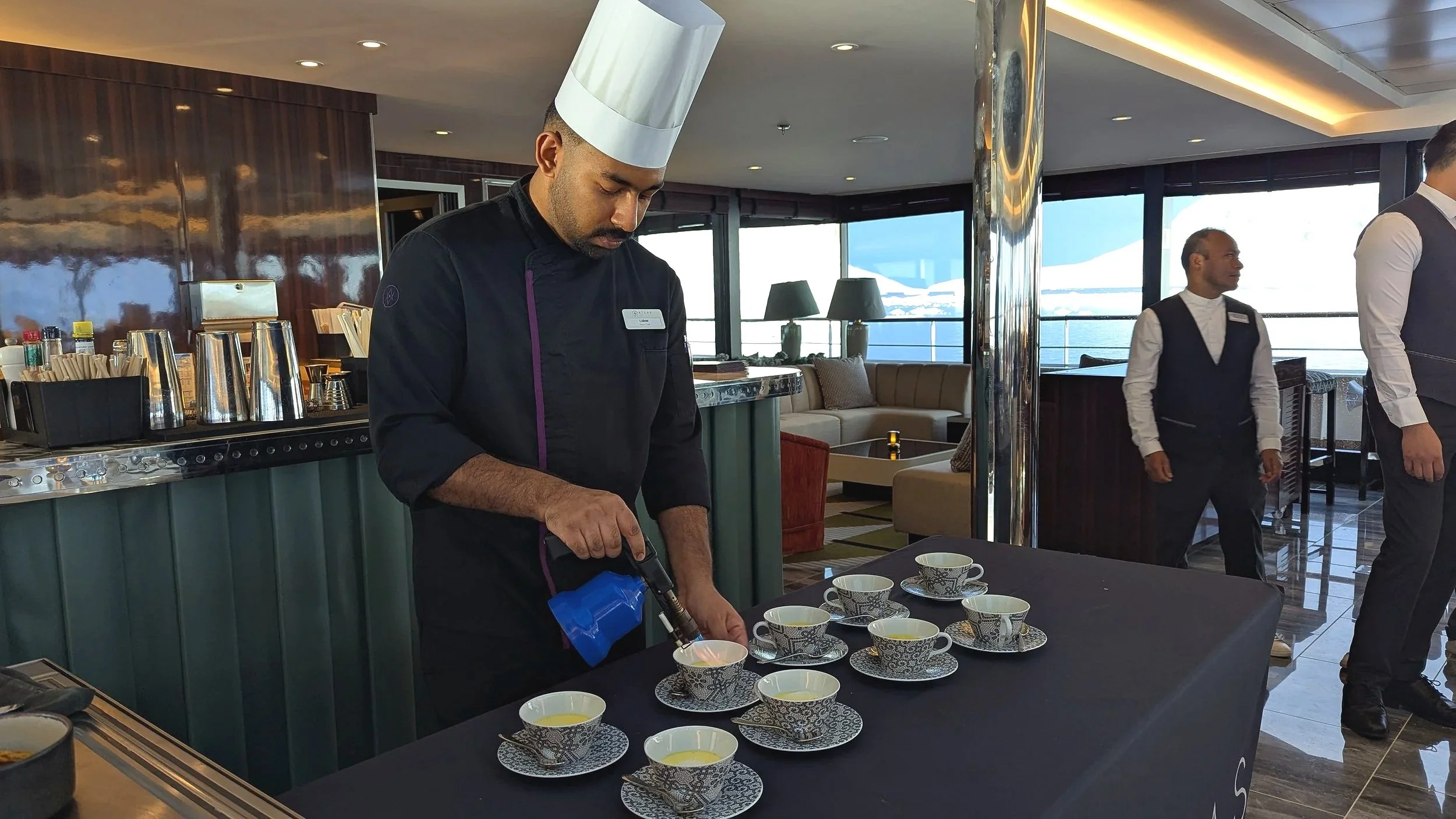
Atlas Ocean Voyages offers an Explorer’s Table dinner where you can watch the chef prepare the courses. This special dinner is for up to 10 people. (Photo by John Roberts)
Atlas has a fantastic culinary program, especially when you consider what they offer onboard during their Antarctica cruises. The main Porto restaurant is complemented by the daily hors d’ouevres at cocktail hour, afternoon tea with sandwiches, scones and sweets and casual eatery/coffee shop Paula’s Pantry.
This isn’t even mentioning the room service available 24 hours and the special multi-course omakase-style Explorer’s Table pairing meal held in The Dome observation lounge at the top of the ship.
I’ve never seen such a wide variety on a small expedition cruise. Porto is the main restaurant, serving buffet-style breakfasts and lunches. You can order omelets and other egg dishes at breakfast, and there are plenty of healthy options like muesli, oatmeal, nuts, seeds and fresh fruits and salmon.
Additionally, you can find delicious breads and doughnuts.
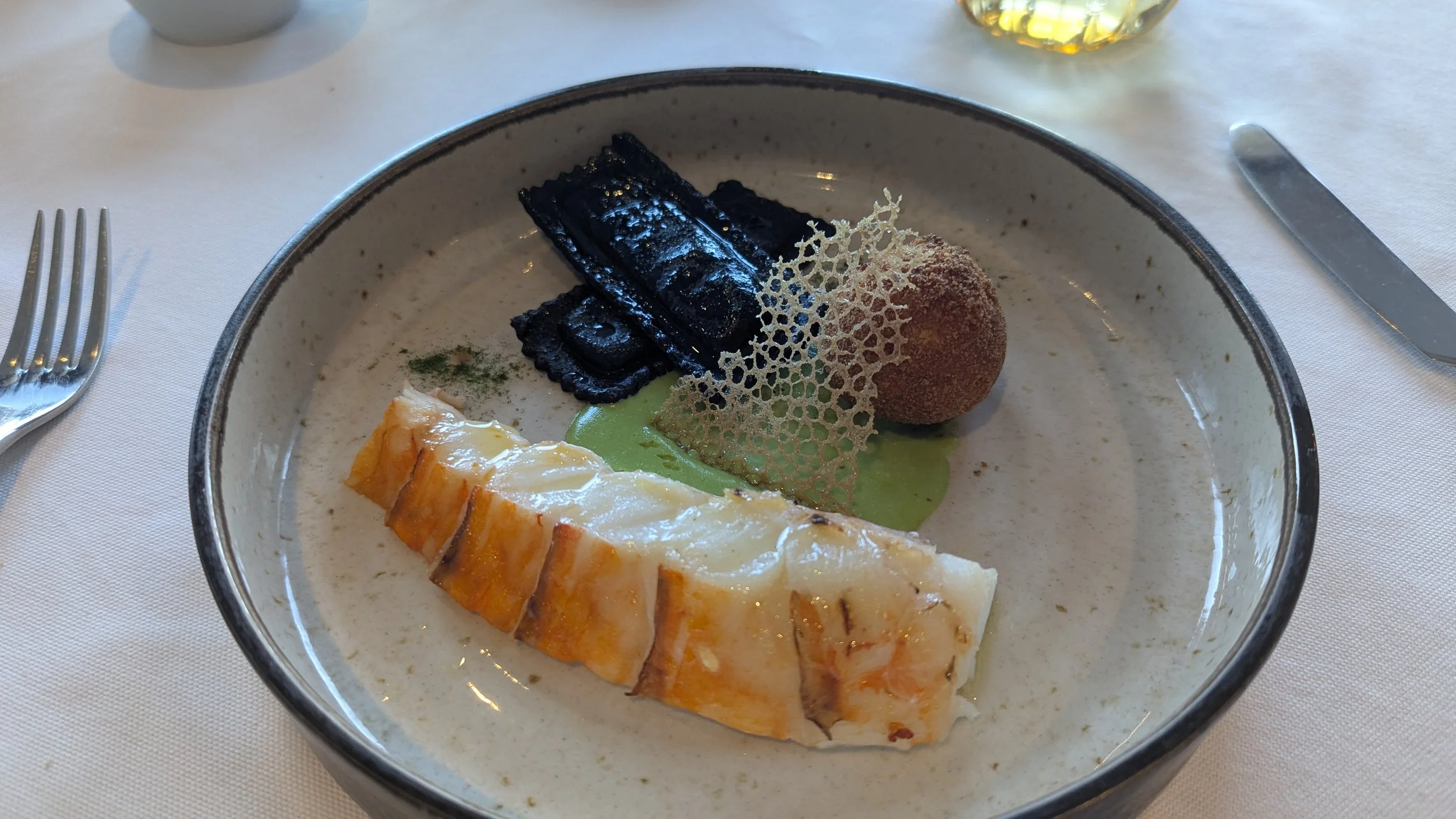
At lunch, there is a live cooking station with items like mussels, crab legs or pasta dishes. You also can order a cheeseburger or other sandwiches off a small menu. The lunch buffet features three kinds of salads, soups, a carving station and daily small bites and vegetarian specialties.
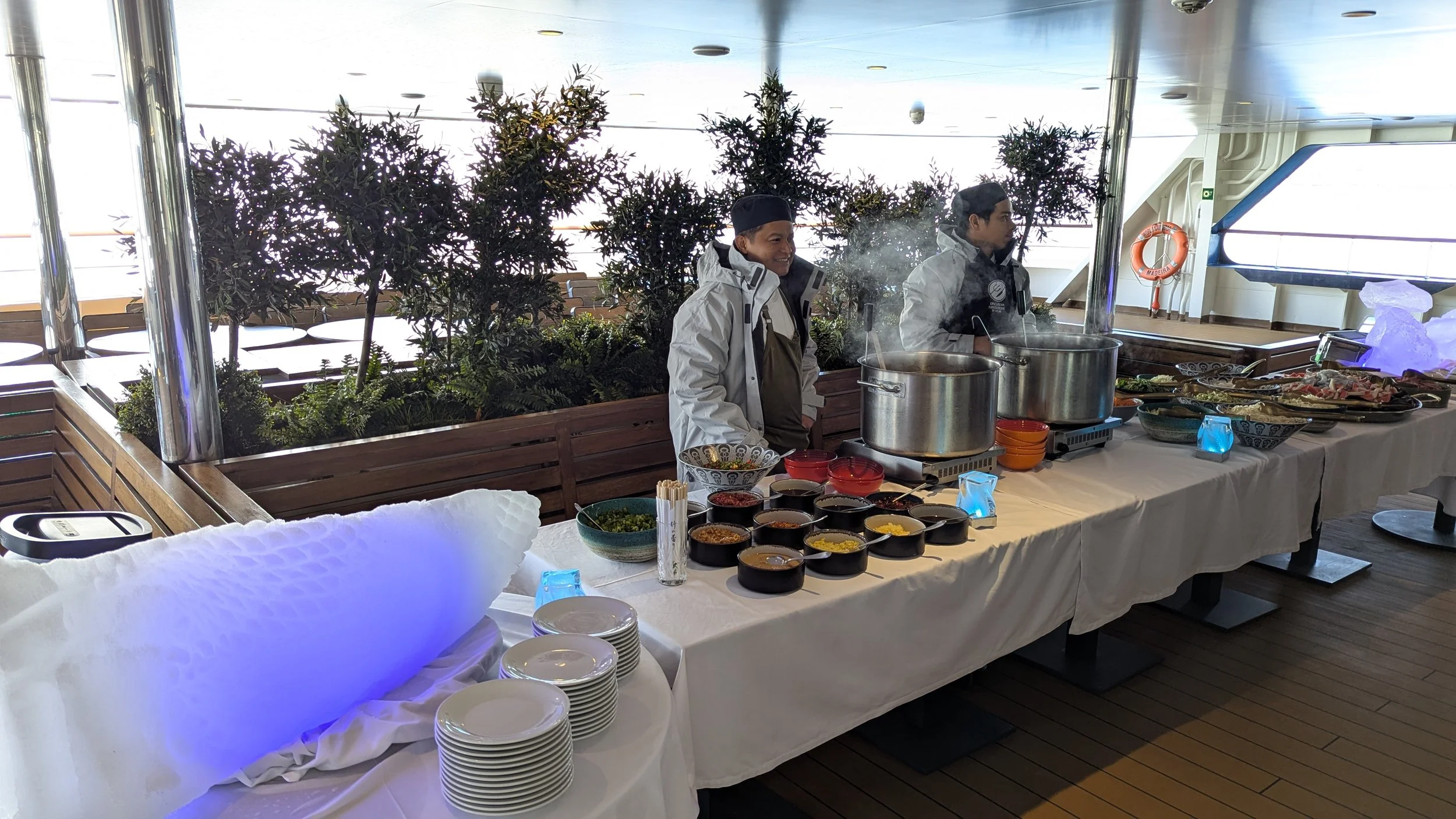
One day, the crew set up a “hot pot” station at the aft of the ship where cruisers lined up for the Asian cuisine of thinly sliced meats, seafood, vegetables, tofu and noodles cooked in a simmering pot of flavorful broth.
Paula’s Pantry opens early and is where you get coffee, tea, smoothies, juice shots, fruit and snacks like empanadas, chia bowls, flat-bread pizzas, doughnuts and cookies.
Afternoon tea in The Dome offers a dazzling array of teas accompanied by cookies and other pastries. Plus, you can order more hearty items such as sandwiches and a slice of pie.
We also enjoyed a fun theme night meal experience. The “Circus Dinner Extravaganza” had tapas stations located throughout the ship, and cruisers wandered from station to station — Atlas Lounge, the lobby, The Dome and Paula’s Pantry — pre-gaming with noodle dishes, pinchos, cheeses and empanadillas before heading into Porto for a special set dinner that was followed by a big reveal of a secret grand dessert buffet served under a big tent.
There were dozens of sweets, including a Ferris wheel of mini eclairs, a chocolate fountain, pavlova tower, muffins, tiramisu, cupcakes, cotton candy and caramel popcorn.
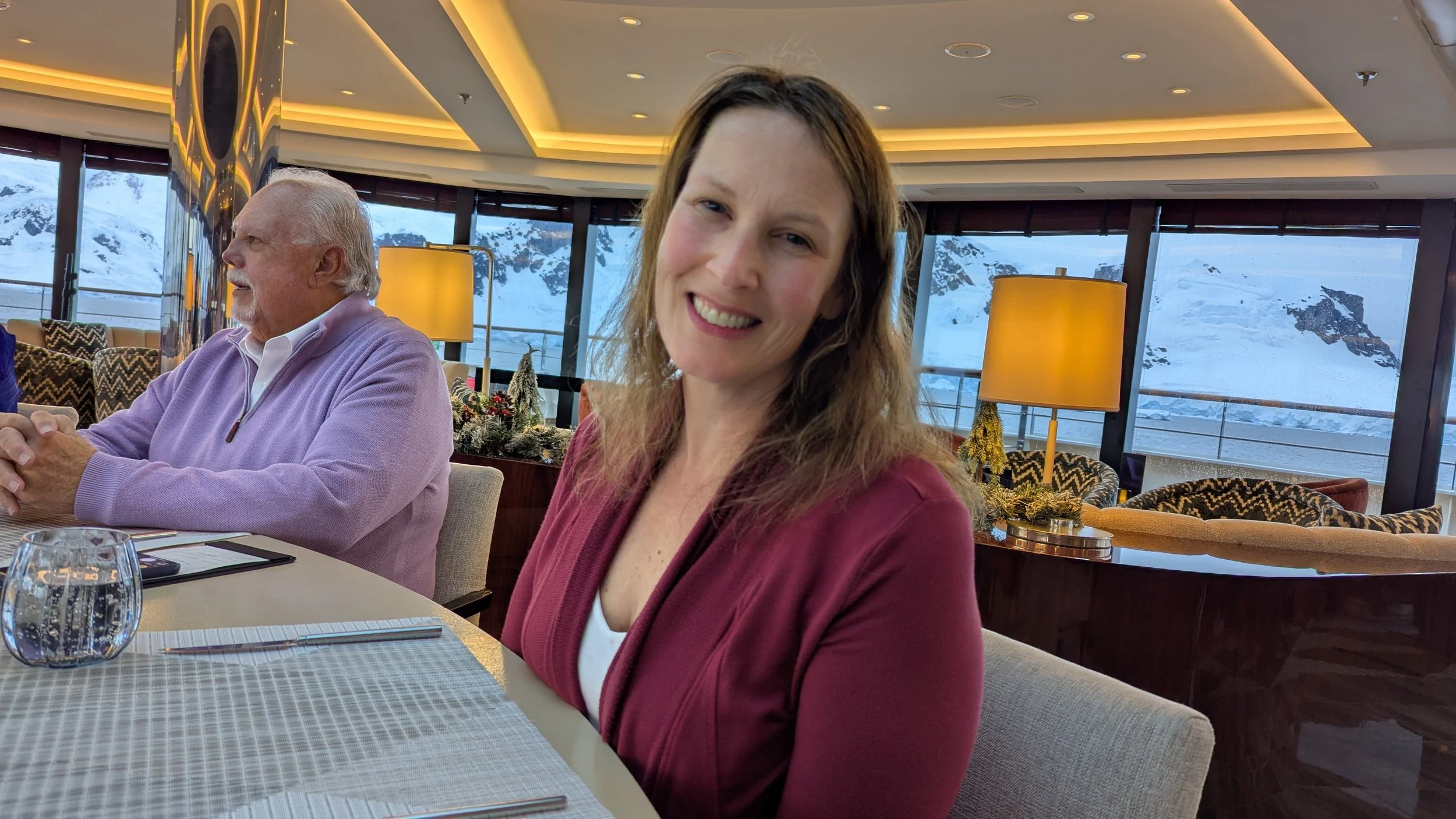
The Explorer’s Table pairing dinner in The Dome was offered twice during our cruise, and it costs $179 per person for a maximum of 10 people who get to dine with the surrounding views while watching the chef prep the courses at a nearby table. Our courses included artisanal brioche bread, toasty monk fish, basil ice cream, tapioca crusted scallop, slow-cooked short ribs and goat cheese creme brulee, all paired with a selection of fine wines and craft cocktails.
Pair this meal with the epic scenery of Antarctica, and you have a most memorable experience, for sure.
4. The Ship Is Filled with Great Amenities, Comfy Spaces
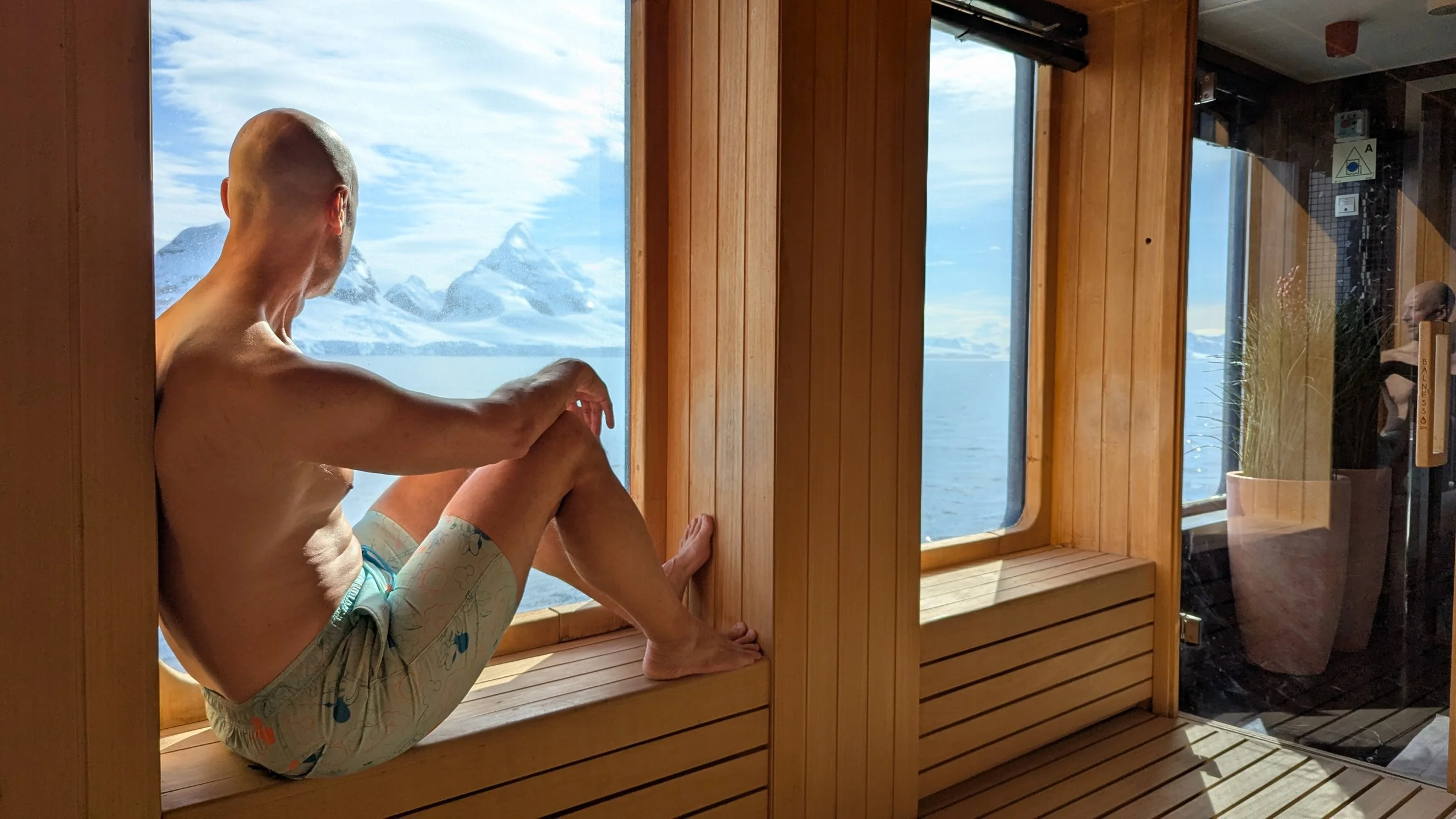
Colleen and I loved relazing in the sauna during our time in Antarctica with Atlas Ocean Voyages. (Photo by Colleen McDaniel)
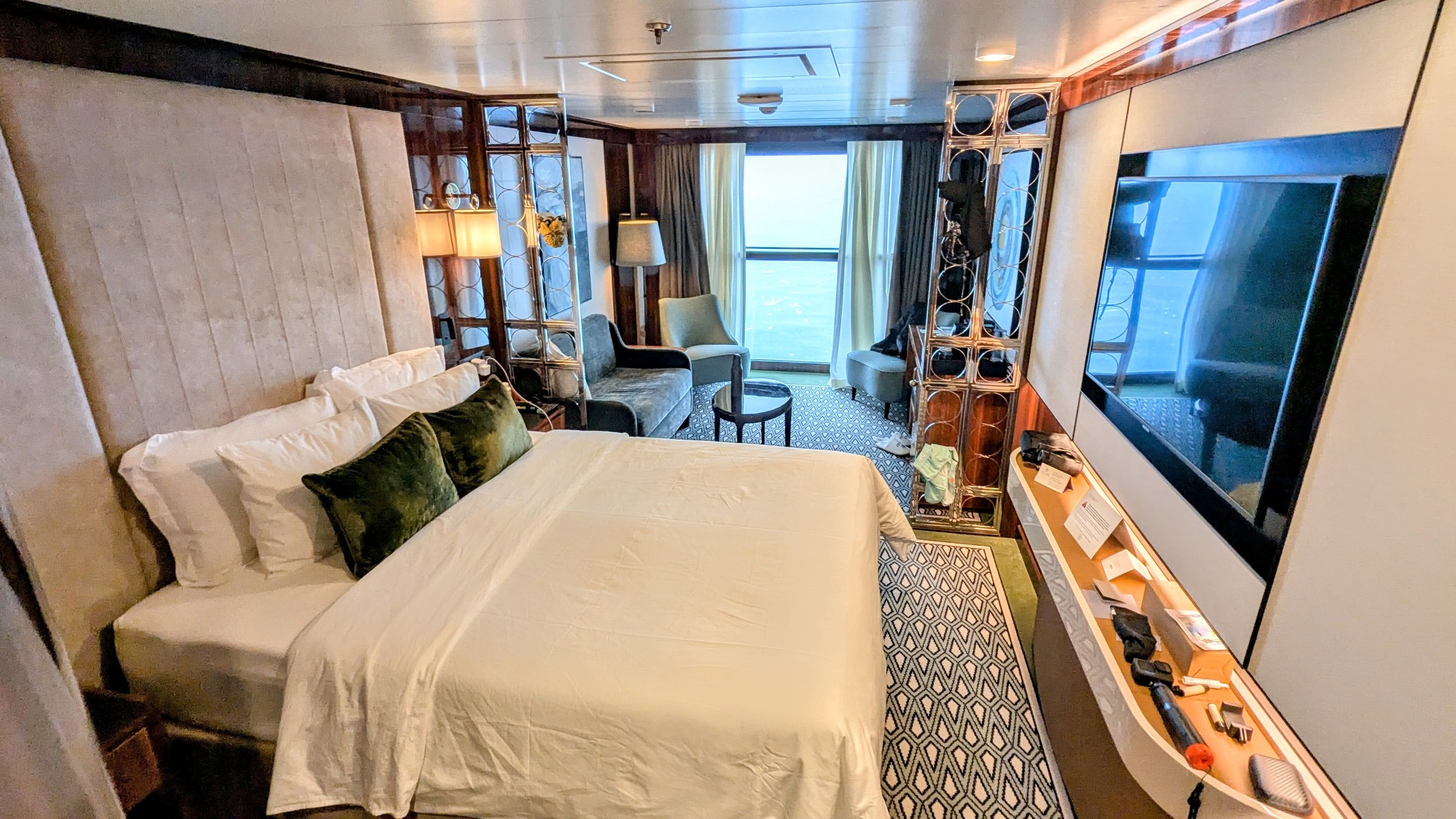
Atlas has three ships in the fleet, all with the same footprint, passenger capacity and amenities — World Voyager, World Traveller and World Navigator.
During our trip on World Navigator, we really loved The Dome, which is where we relaxed in the afternoon with views while sailing, enjoyed tea time while playing card games and went up after dinner for a craft beer and the live music and dancing.
Our other favorite spots: the sauna with relaxation room and swimming pool with hot tubs.
The ship has a spa with an attached sauna. Colleen and I spent several mornings in the relaxation room, comfy in the robes provided to each cruiser in the cabins. We would read and pop into the sauna a few times to unwind during our days at sea. We also enjoyed two massages during the trip -- one at the beginning and once near the end of the trip as we sailed back to Ushuaia. It was an ideal way to get refreshed after a long flight down to start the voyages and then rejuvenate our bodies after a week of active hikes, kayaking, drinking and dancing.
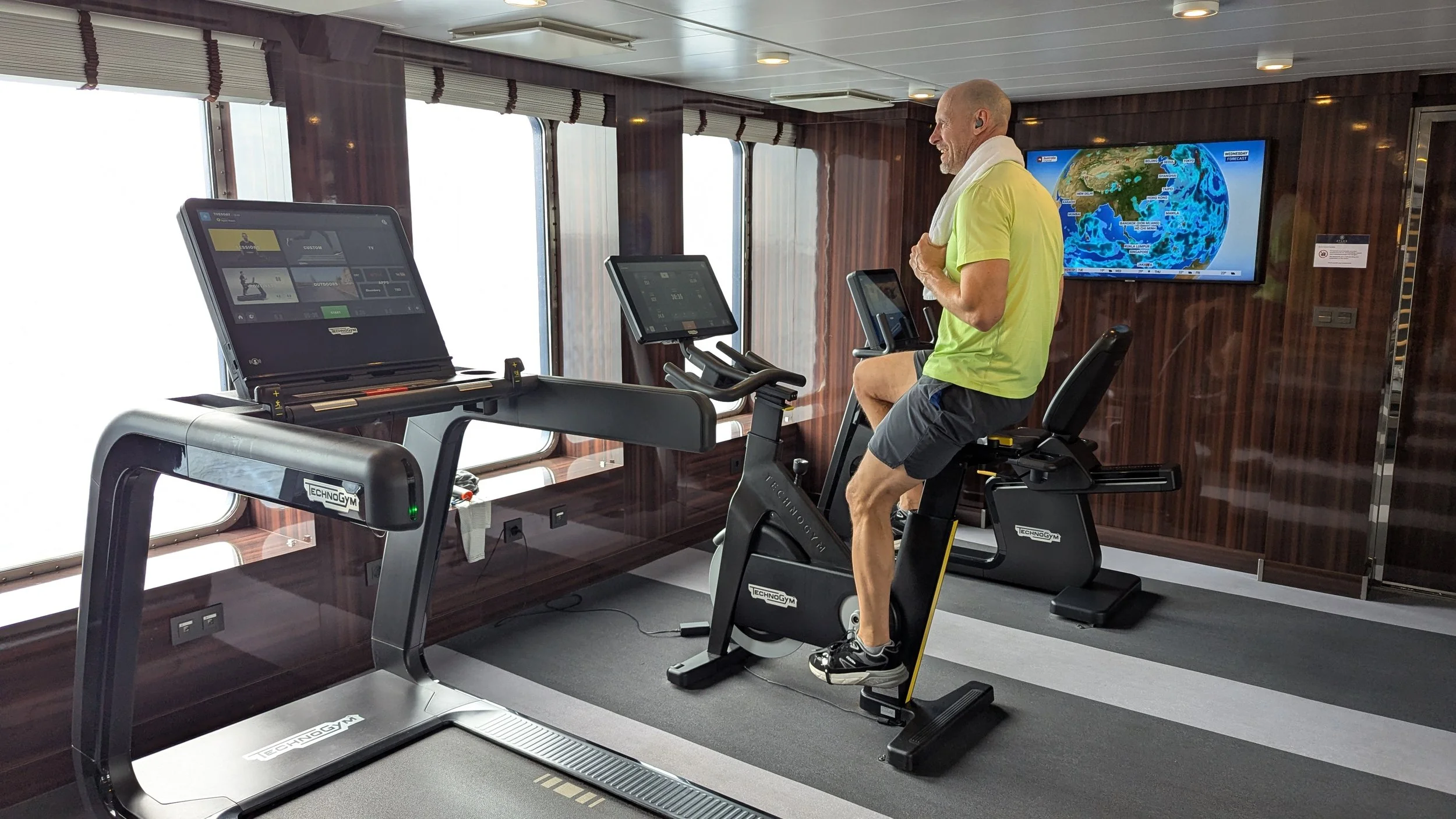

There also is a small fitness center with dumbbells and cardio equipment. It was nice to get in a daily workout while on the cruise to help offset some of the decadent meals and drinks we were consuming.
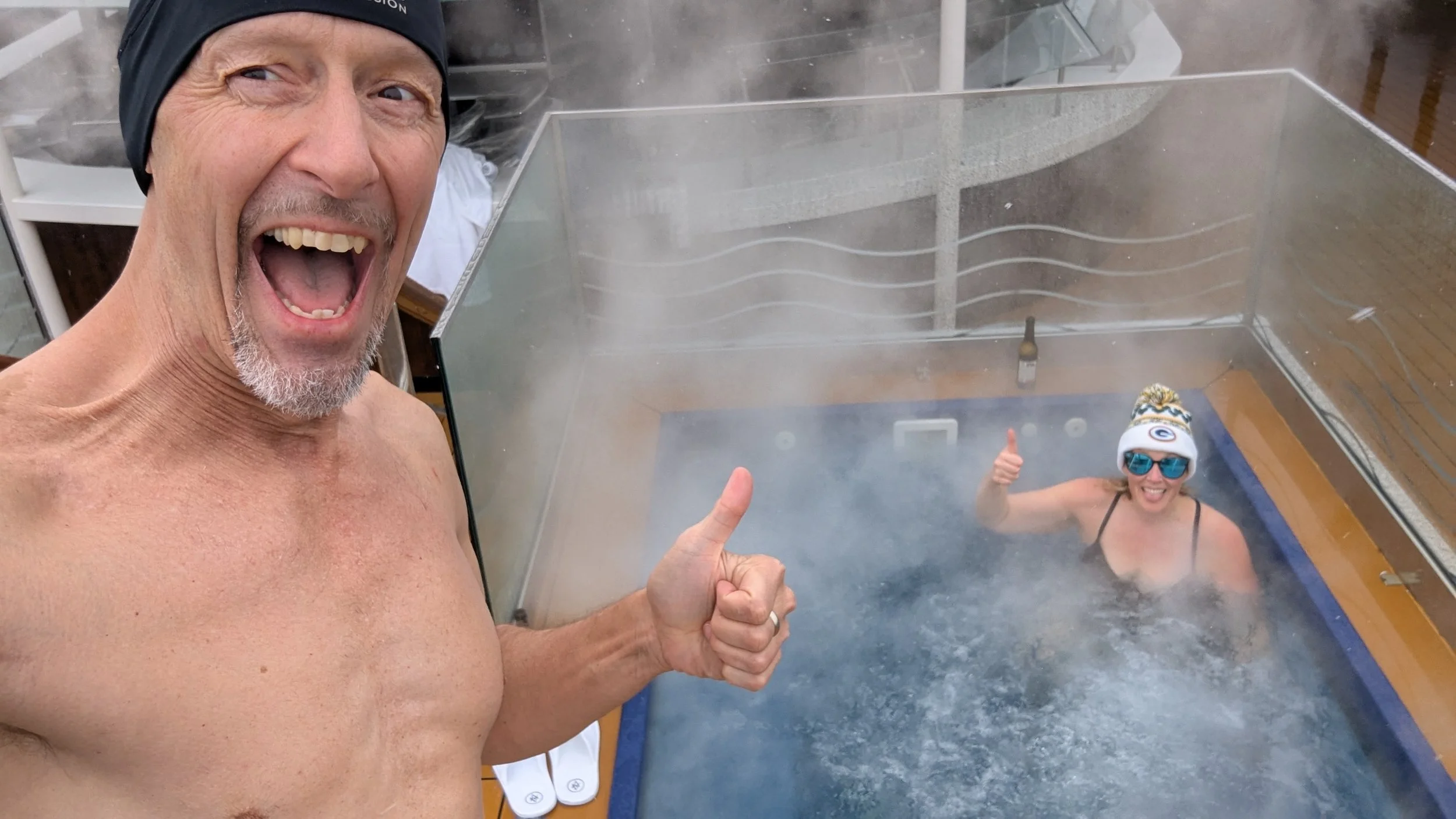
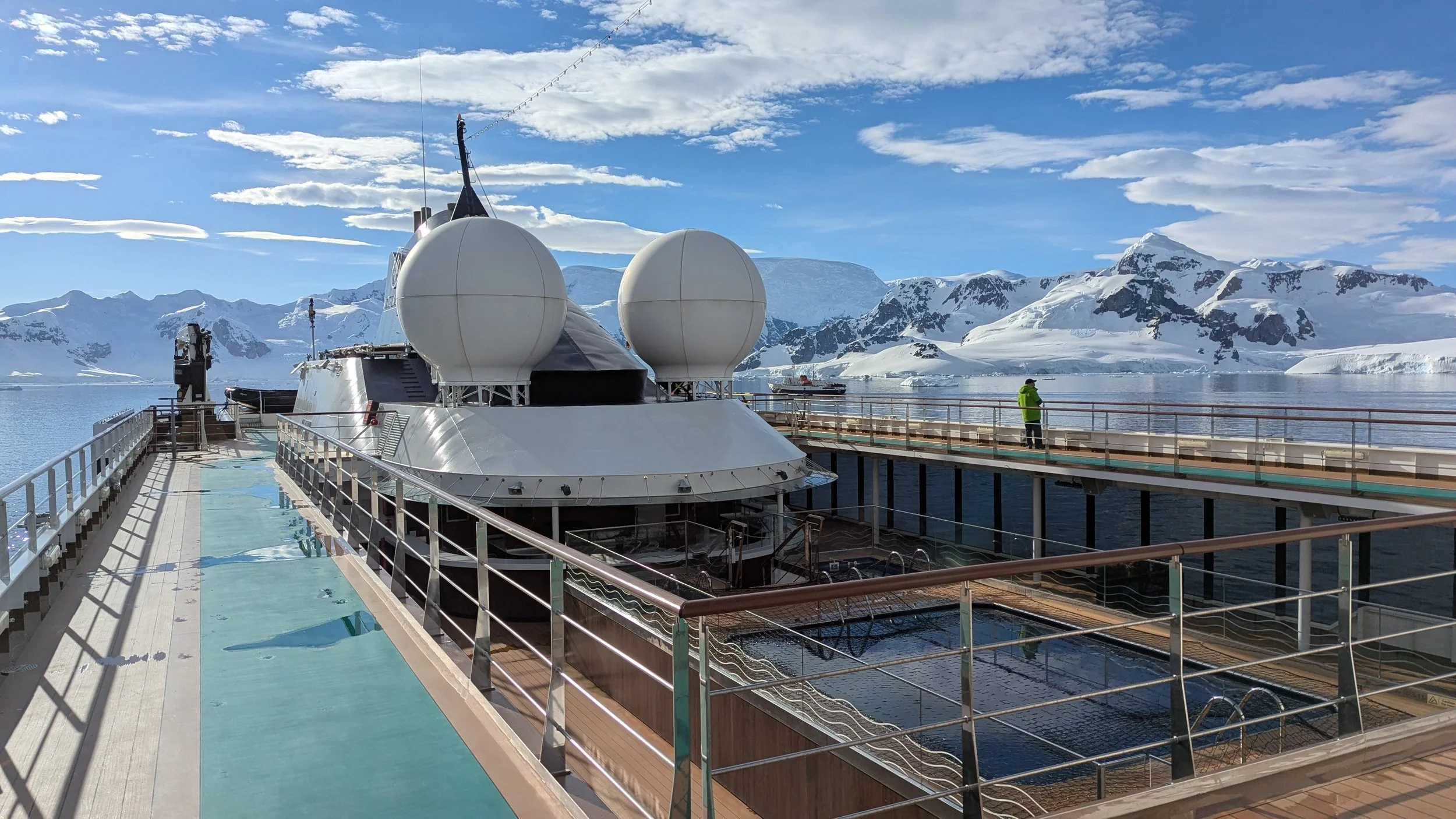
At the top of the ship is a heated pool and two hot tubs. Cruisers loved this spot, giving a place to unwind with a drink while taking in the surrounding scenery. It was an especially popular spot to warm back up and celebrate after the polar plunge.
Atlas Lounge is an indoor space that leads to the theater. The lounge is a natural gathering spot with a bar for cocktails, beers, wine or hot chocolate in the afternoon or right before dinner. The theater was where the expedition team would give daily briefings and enrichment talks on subjects such as the history of the region or the animals and geology of Antarctica.
Often, there would be a movie or documentary available to watch there, too.
Atlas Ocean Voyages’ ships also feature a nice gift shop filled with stylish apparel, cool souvenirs and various sundries.
5. Plenty of Music and Entertainment Makes Evenings Fun
The Dome is the spot for evening entertainment. Our cruise director Daniel is an excellent singer, and he offered a couple of performances, singing popular hit songs that cut across a variety of decades and genres.
The ship also featured a duo, Fablux, who performed every night as people just hung out late into the evening chatting or taking a spin on the dance floor. The views were good all night. The sun sets, but it never gets dark even past midnight during austral summer in Antarctica.
Our Top Tips for Picking a Cruise to Antarctica:
The Antarctica cruise season is fairly short, running from November to March during the austral summer when temperatures hover between 28 degrees and 46 degrees Fahrenheit and daylight lasts up to 24 hours.
Each month offers distinct experiences, influencing wildlife activity, ice conditions and crowd levels. Small ships operate throughout the season and are always the best bet vs the large ships that don’t make landings and simply do drive-by Antarctica experiences.
Choose the right season to ensure you have the trip you really want.
Early season (late October to November) is ideal for pristine landscapes and fewer crowds. Ice is at its thickest, creating dramatic scenery with massive bergs and frozen seas. With the pack ice and snow, though, comes less certainty about being able to land at some locations. However, your expedition team and captain always adjust well on the fly to get to places that are accessible and interesting.

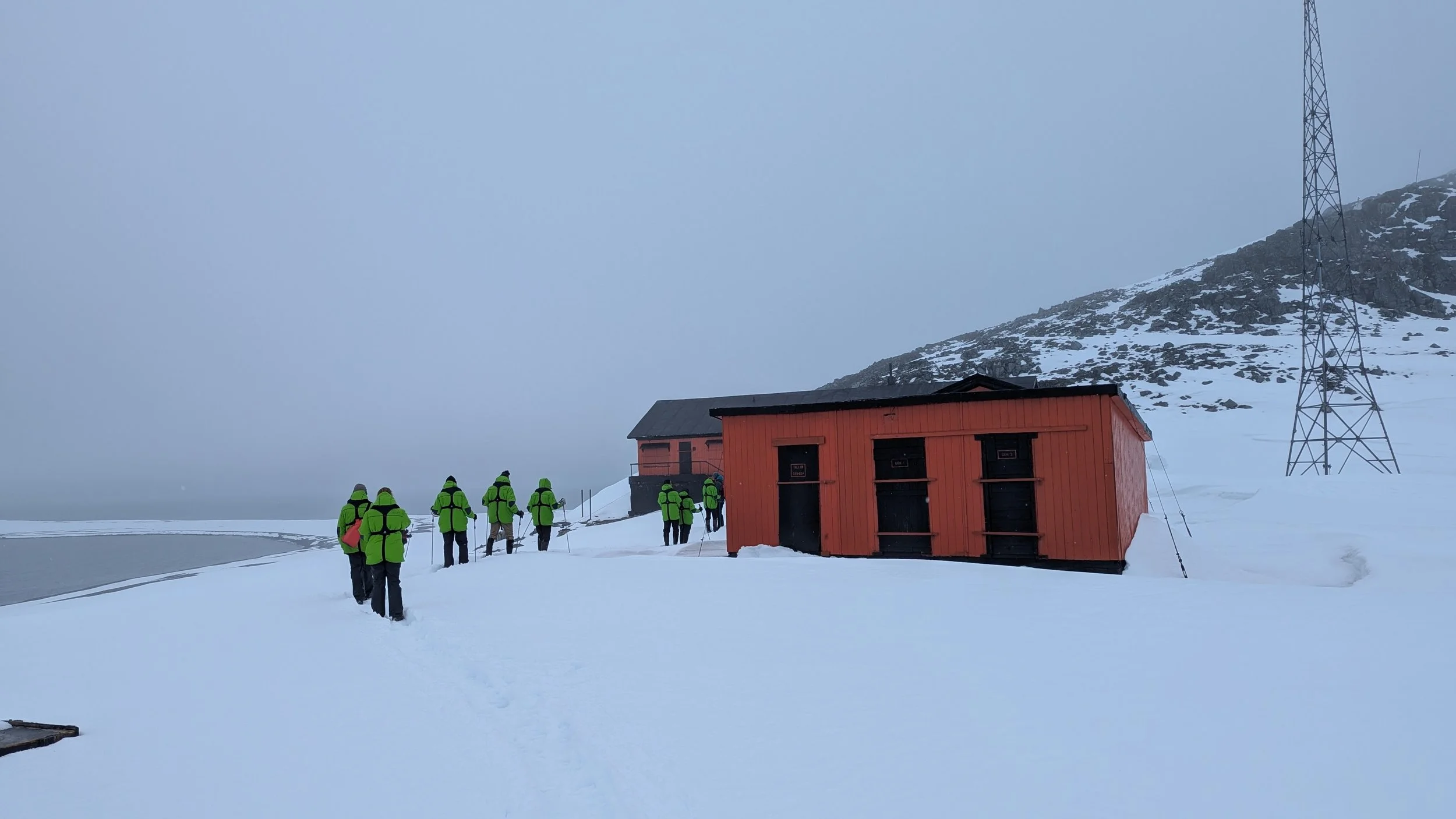
December and January is peak season. This brings warmer temperatures and peak wildlife activity. Penguin chicks hatch, and you’ll love the opportunity to see these adorable fluffy babies. Also, seals give birth on beaches, and whales arrive in full force to feed on krill blooms.
This is when small cruise ships shine, offering multiple daily excursions without the bottlenecks of larger groups. Expect higher prices and more ships competing for the landing spots, though small vessels can easily keep your experience nice and intimate.
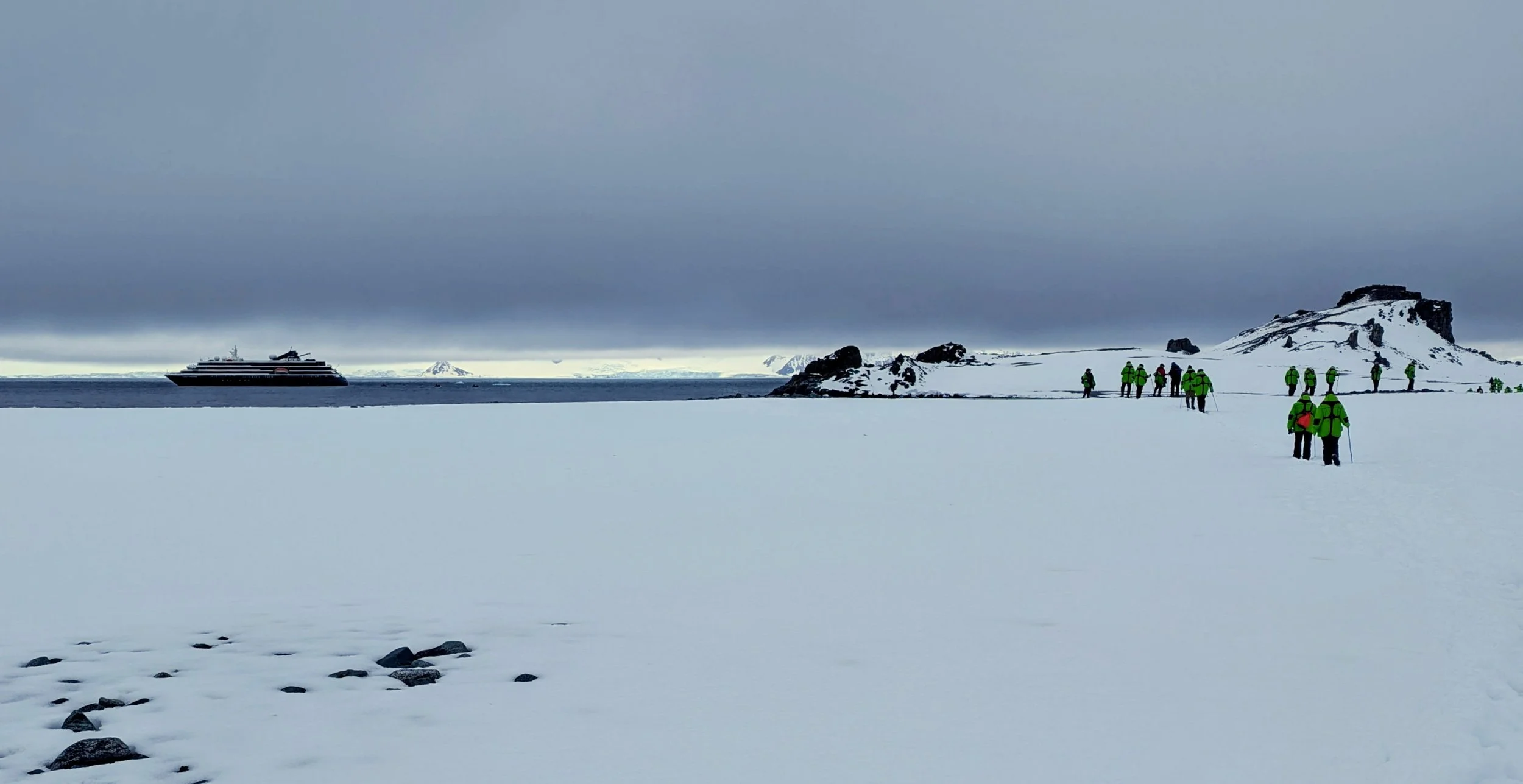
Hiking in the snow at Half Moon Island is just one of the incredibly fun daily activities that we wereable to take part in during our cruise. (Photo by John Roberts)
Late season (February to March) focuses on whale watching, as humpbacks and orcas are abundant and approachable. The ice also will be mostly melted away, revealing more landing sites and easier access to fjords. Penguins fledge, and you'll see these young birds molting and starting to swim. This period suits photographers chasing golden light and fewer crowds. Plus, you’ll be able to find the best pricing and deals on last-minute bookings.
This trip was one of my top small-ship travel experiences. Read about some of my other recent great cruises in my article for Quirky Cruise, a website where I write about more of my small-ship adventures.